Peptide terminology appears in lab reports, product descriptions, published studies, and everyday discussions.
This glossary explains 140 terms, from amino acids and peptide bonds to reconstitution, BAC water, and syringe units.
The entries are arranged alphabetically.
Related entries explain differences between terms that are easy to confuse.
The definitions explain terminology, not dosing or administration instructions.
A
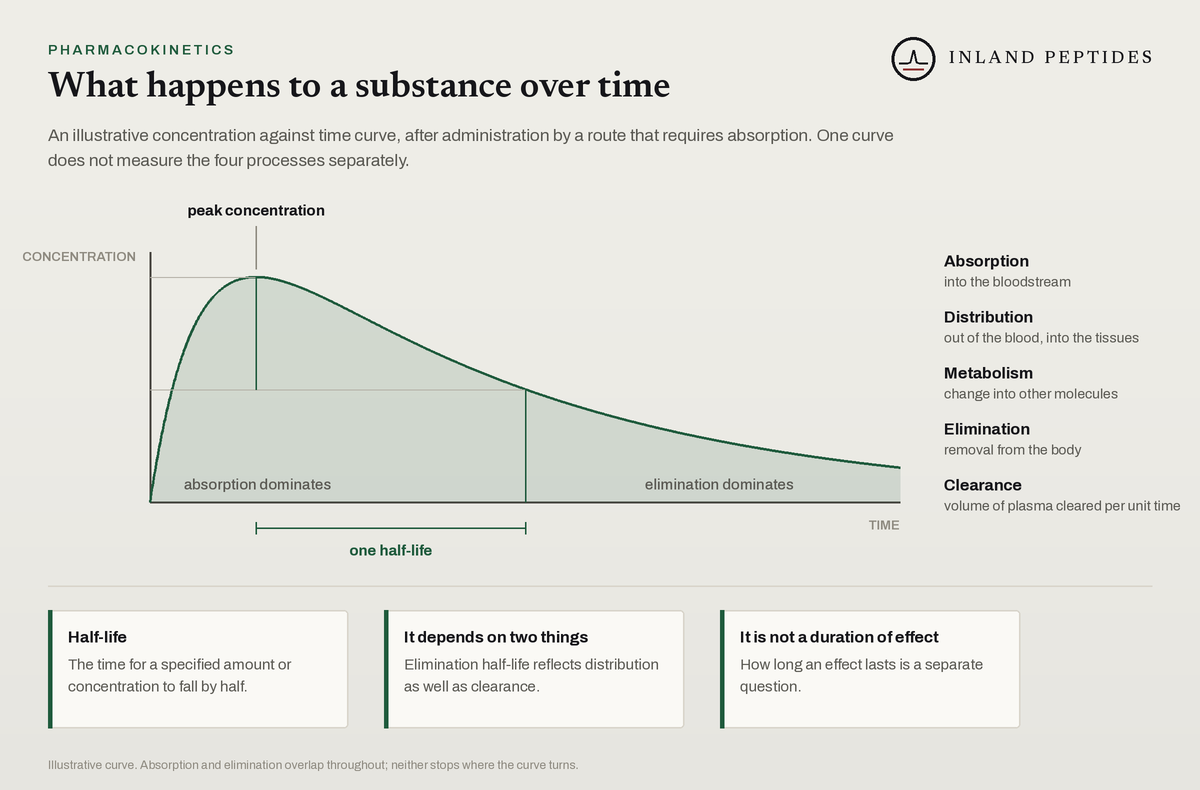
Absorption: The movement of a substance from where it was administered into the bloodstream. The route affects absorption, so a compound given under the skin may be absorbed differently from the same compound swallowed.
Accreditation: A formal finding by an independent accreditation body that a laboratory is competent to perform specific tests, assessed against a standard such as ISO/IEC 17025. Accreditation is granted for a defined scope of testing, so a laboratory can be accredited for one method and not another.
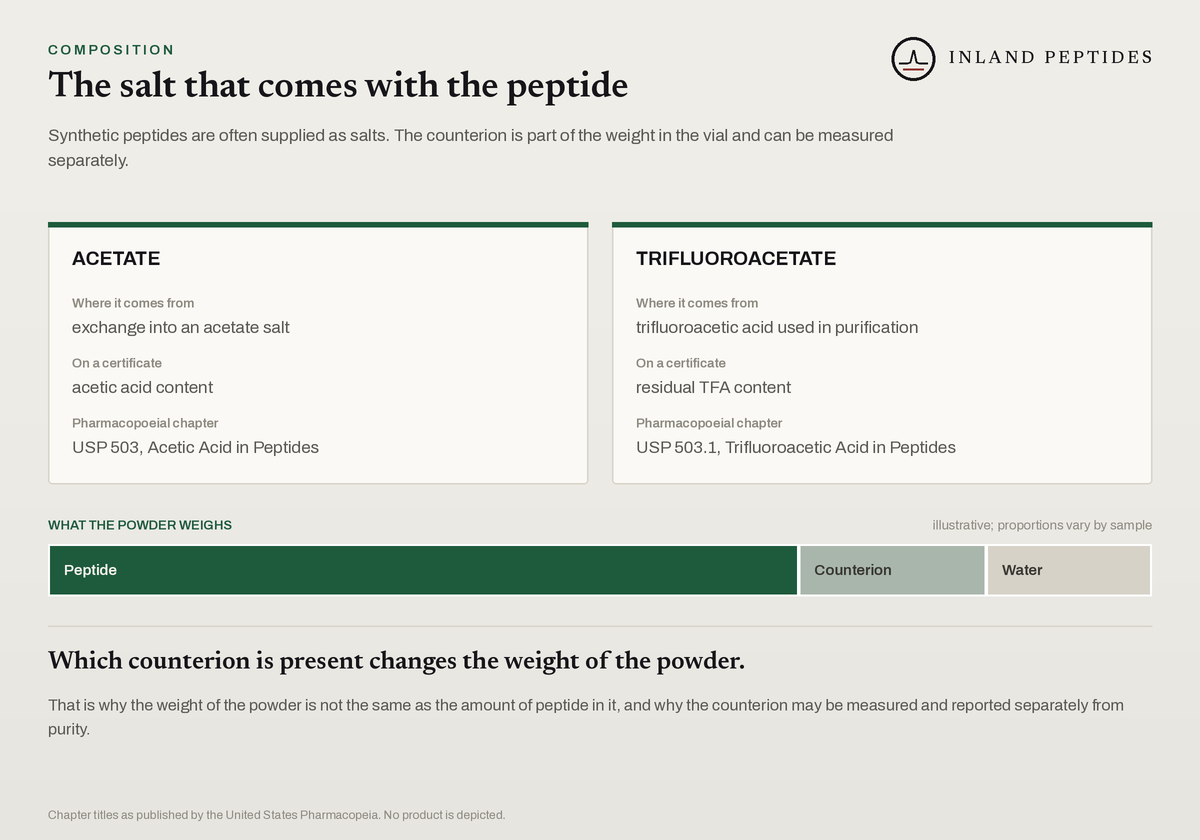
Acetate: A counterion commonly paired with synthetic peptides to form an acetate salt. The counterion contributes to the powder’s weight, so the total weight is greater than the weight of the peptide alone.
Active pharmaceutical ingredient (API): The ingredient in a product that is intended to provide the pharmacological activity.
Adverse event: Any unwanted medical occurrence in someone who has received a product, whether or not the product caused it. An adverse event in a study report does not, by itself, establish that the product was responsible.
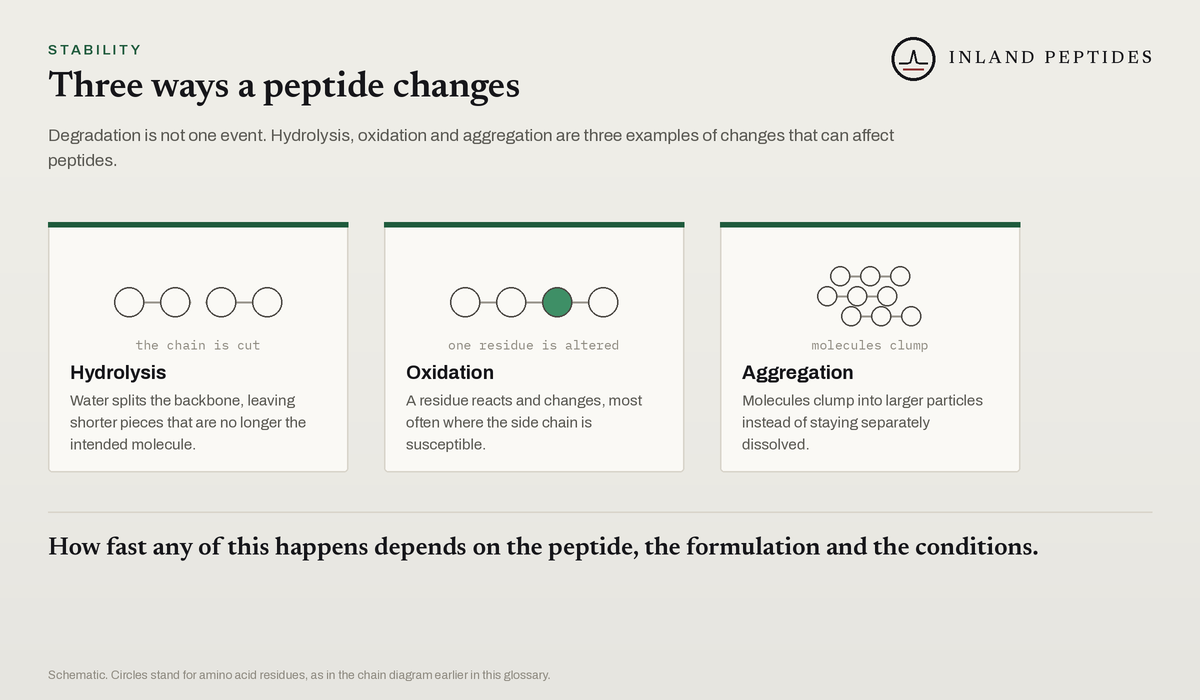
Aggregation: Peptide molecules clumping together into larger particles instead of staying separately dissolved. Aggregated material can show up as haze, as visible particles, or as a change in a purity result.
Agonist: A substance that binds a receptor and activates it, producing a response in the cell. Many research peptides are described as agonists at a named receptor.
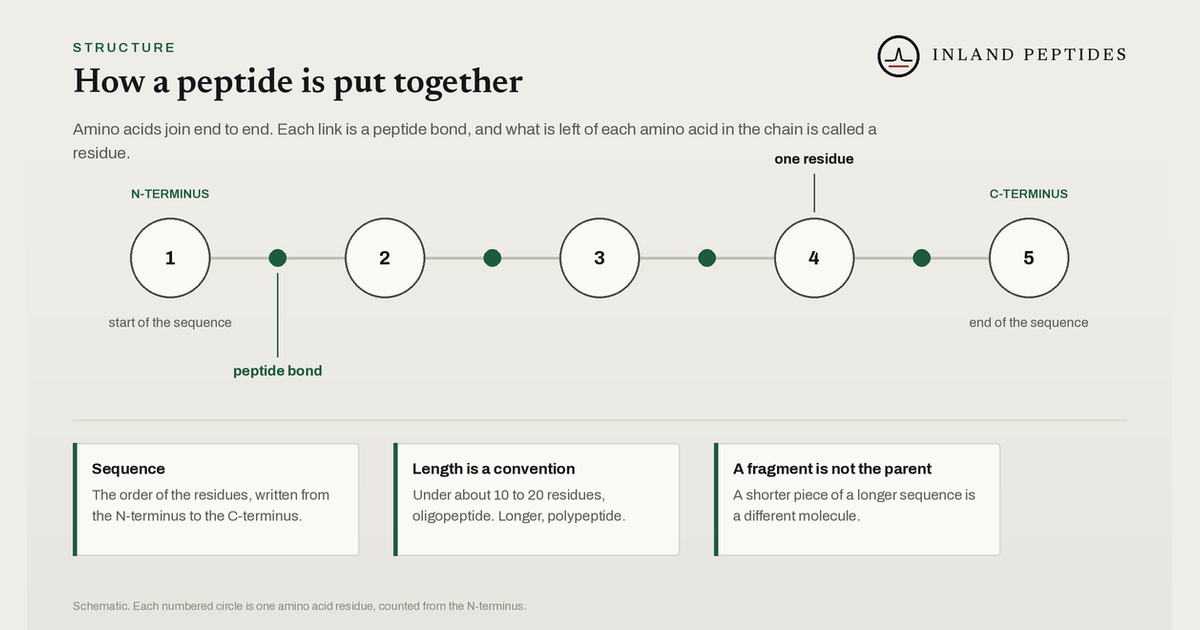
Amino acid: One of the small molecules that join together to form peptides and proteins, each carrying an amine group at one end and a carboxyl group at the other. The side chain is what makes one amino acid different from another.
Amino acid residue: What remains of an amino acid once it has been joined into a peptide chain. Chain length is counted in residues, so a 29-residue peptide is built from 29 amino acids.
Analog: A compound deliberately modified from a reference molecule, usually by changing, adding, or removing part of its structure. An analog is not the same molecule as the original, and one change can alter how it behaves.
Antagonist: A substance that binds a receptor without activating it, blocking the response another molecule would produce there. Antagonists are described by the receptor they block.
Aseptic technique: Handling practices meant to keep microorganisms out of a sterile product, surface, or container. It prevents contamination rather than removing it.
Assay: A laboratory procedure that measures something specific about a sample, such as how much of a compound is present or whether a contaminant can be detected.
B
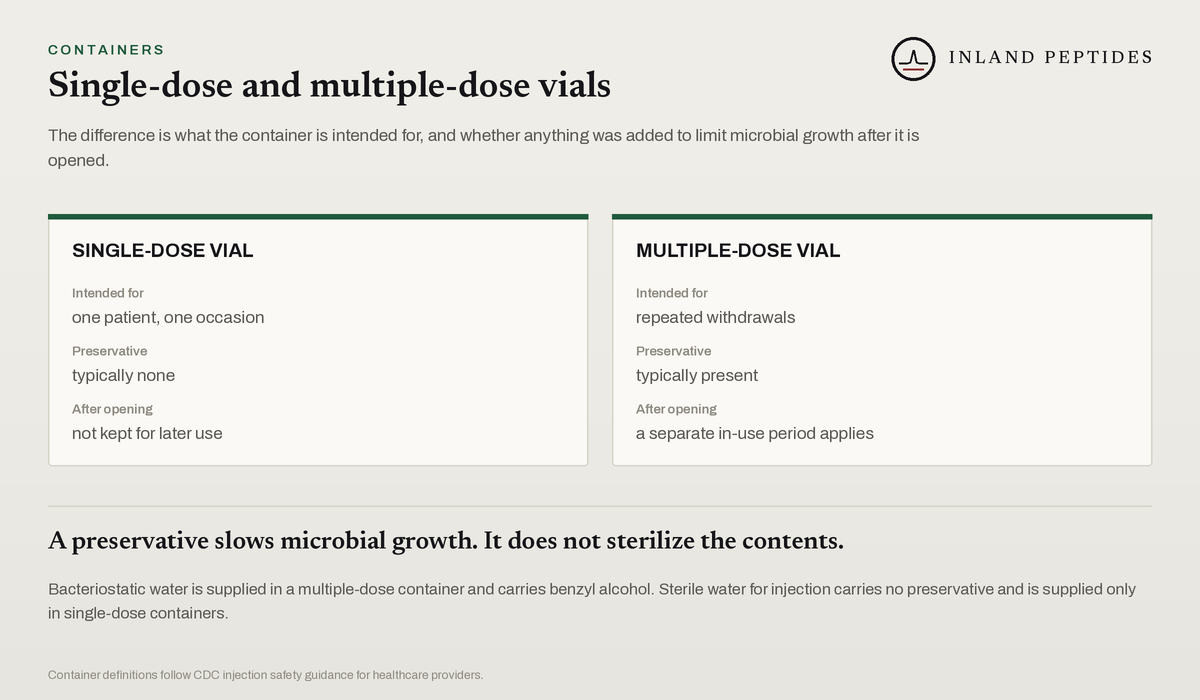
Bacteriostatic water (BAC water): Sterile water with benzyl alcohol added as a bacteriostatic preservative, supplied in a multiple-dose container from which repeated withdrawals may be made. Labeled products state the preservative content, commonly 0.9 or 1.1 percent, and carry a warning against use in newborns.
Batch: A quantity of material produced in a single run under the same conditions. Test results belong to the batch that was sampled, not to every batch carrying the same product name.
Benzyl alcohol: The antimicrobial preservative used in bacteriostatic water. Labels for products containing it carry a warning against use in newborns.
Beyond-use date (BUD): The date after which a prepared, repackaged, or opened product should not be used. It is assigned separately from the manufacturer’s expiration date, using applicable standards or stability data for that preparation.
Bioavailability: The rate and extent to which the active ingredient is absorbed from a product and becomes available at the site of action. Products containing the same amount of a compound can differ in bioavailability.
Bioburden: Viable microbial contamination in or on a material. It is commonly measured before sterilization or filtration.
Bioequivalence: The absence of a significant difference in the rate and extent to which the active ingredient becomes available at the site of action, when two products are given at the same molar dose under similar conditions. It is a comparison of availability under defined study conditions.
Buffer: A combination of substances that helps a solution resist changes in pH. Buffers are used in peptide formulations because stability can depend on a narrow pH range.
C
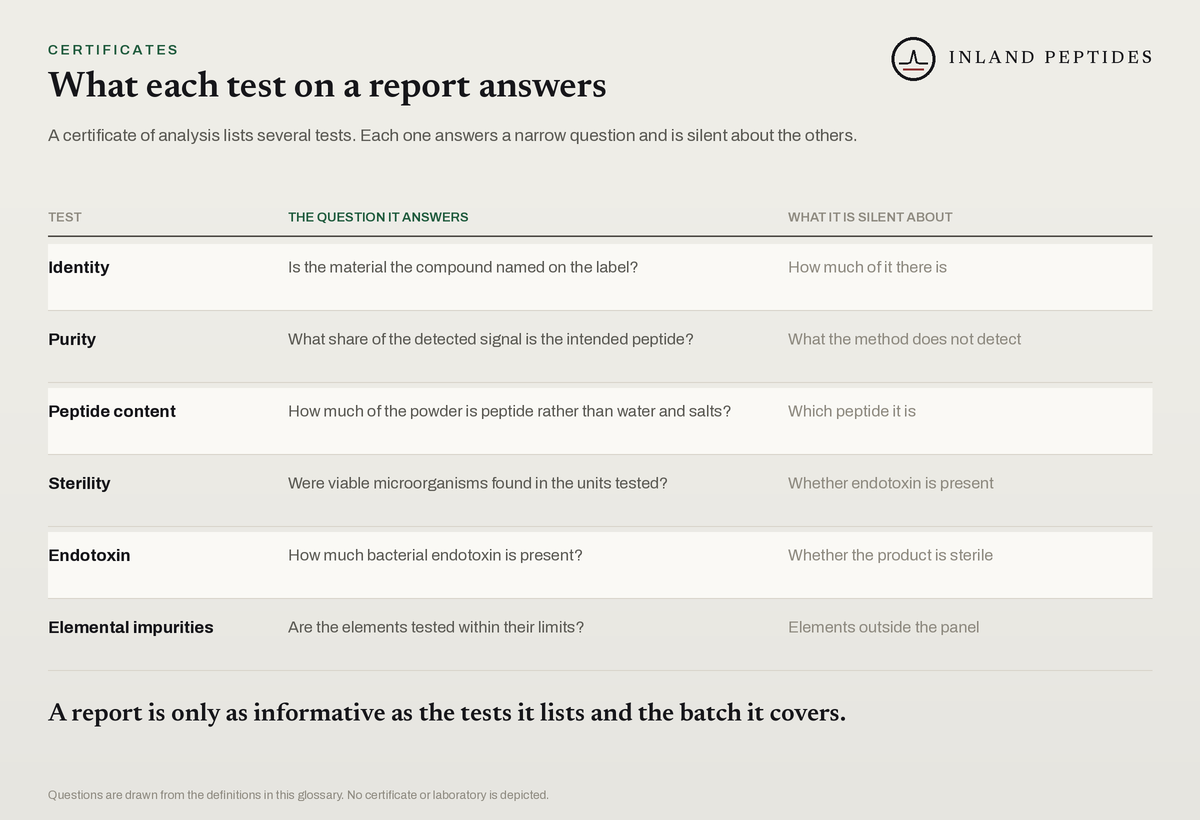
Certificate of analysis (COA): A document from a laboratory or manufacturer reporting test results for a specific batch. Its usefulness depends on the tests, methods, and batch information it includes.
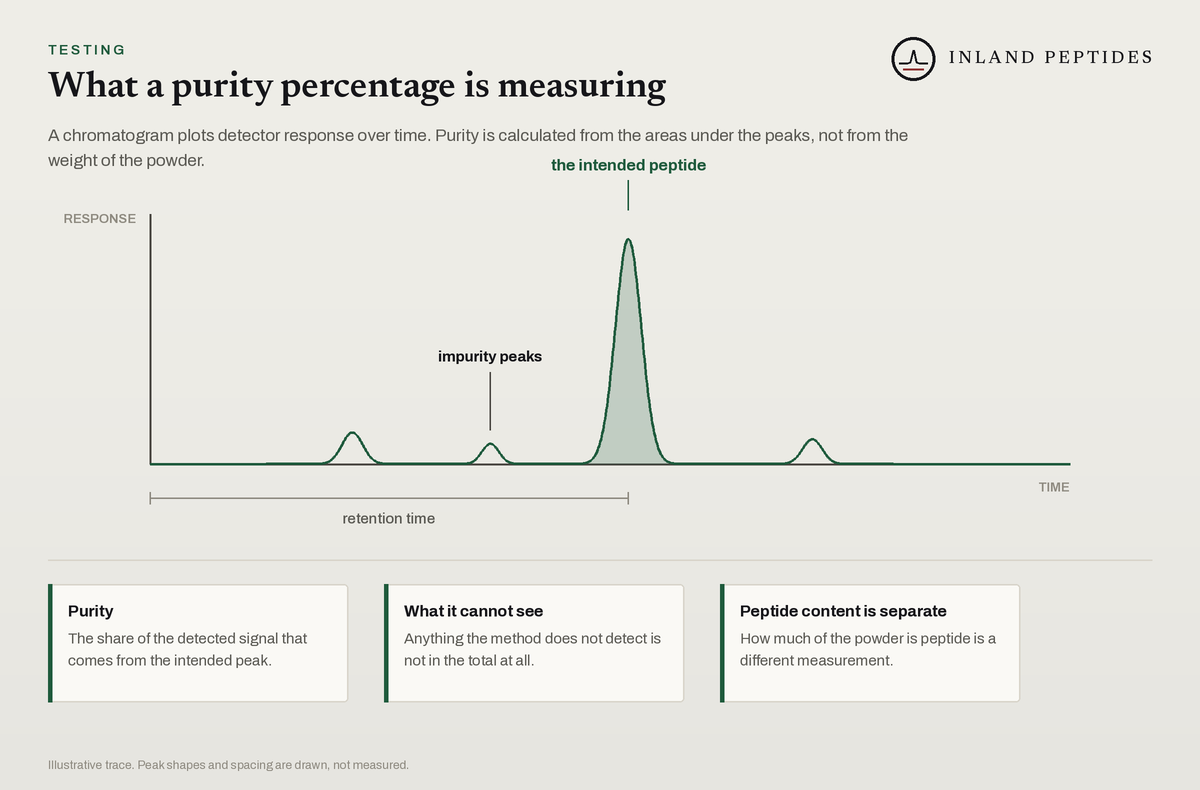
Chromatogram: The plot a chromatography run produces, showing detector response over time as separated components leave the column. Chromatographic purity can be calculated from the integrated areas of its peaks.
Clearance: The volume of plasma effectively cleared of a substance per unit of time. It is expressed as a volume per unit time rather than as an amount removed.
Clinical trial: A study in which people receive an intervention under a defined protocol so its effects can be measured. Results describe what happened in that study population under those conditions.
Cold chain: Keeping a product within a specified temperature range during storage, shipping, and handling. A break in that temperature control can affect the product even if it is stored correctly afterward.
Compounding: Preparing a medication by combining, mixing, or altering ingredients, rather than supplying it as the manufacturer packaged it. A compounded drug is not an FDA-approved product, and federal law sets separate conditions for pharmacies and for registered outsourcing facilities.
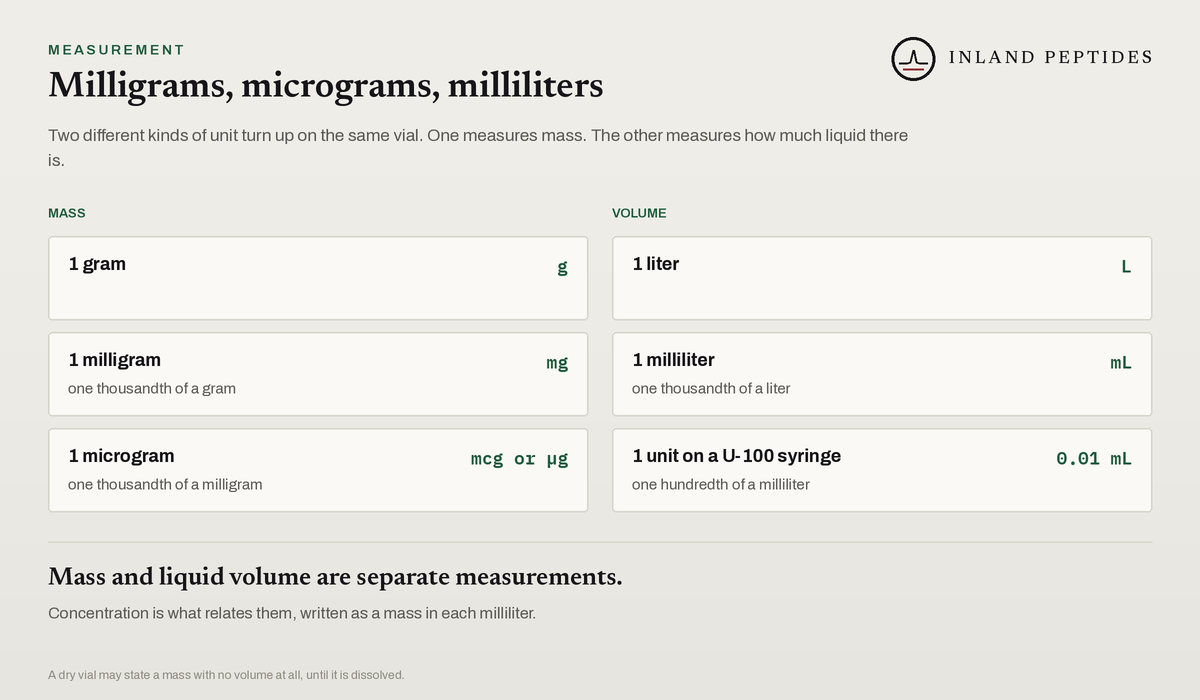
Concentration: The amount of a substance in a given volume of liquid, often written as mg/mL. Concentration describes how much peptide is in each milliliter; dose describes the amount administered.
Contamination: The presence of an unwanted substance or organism in a product. It covers microbial contamination, particles, residues from equipment, and material carried over from another product.
Contraindication: A condition or circumstance under which a product should not be used. Contraindications appear in approved labeling.
Counterion: An oppositely charged ion paired with a peptide to form a salt, commonly acetate or trifluoroacetate. It contributes to the powder’s weight and may be measured or reported separately.
C-terminus: The end of a peptide backbone that finishes the sequence, written at the right. Its carboxyl group may be chemically modified or blocked rather than free, as in a peptide amide.
Cycling: Community terminology for using a compound for a set period, stopping for a period, then resuming. It describes a pattern people adopt, not a standardized schedule.
D
Degradation: The chemical breakdown of a peptide into smaller or altered molecules over time. Heat, light, moisture, and pH can accelerate degradation, depending on the peptide and formulation.
Detection limit (LOD): The smallest amount of a substance a method can reliably detect, without necessarily measuring how much is there. A result reported as not detected means below this limit, not absent.
Diluent: The liquid used to dissolve or dilute a product. A product’s specified diluent is part of its instructions and should not be assumed interchangeable with another liquid.
Dilution: Adding more liquid to a solution to lower its concentration. The total amount of peptide does not change; the amount in each milliliter does.
Distribution: The movement of a substance out of the bloodstream and into the tissues of the body. How widely a substance distributes affects how long it takes to be eliminated.
Dosage: The prescribed regimen, including the amount, route, and frequency of administration. A dose is a single amount; dosage describes the overall pattern of use.
Dose: The amount of a substance administered at one time, expressed as a mass, a unit of activity, or a volume of a solution with a known concentration. A syringe marking indicates volume and does not, by itself, state the mass of peptide.
Dosing frequency: How often a dose is given, such as daily or twice weekly. The same weekly total can produce different exposure patterns depending on how it is divided.
E
Efficacy: Whether an intervention produces the intended effect under the conditions of a study. Efficacy measured in a trial is not the same as effectiveness in ordinary use.
Elemental impurities: Metals and other elements that can enter a product through raw materials, equipment, or processing. Guidelines group them by toxicity and likelihood of occurrence, and testing selected elements does not establish results for the others.
Elimination: The removal of a substance from the body, by metabolism, by excretion, or by both.
Endogenous: Produced inside the body. An endogenous peptide is one the body makes itself.
Endotoxin: A heat-stable component of the outer membrane of gram-negative bacteria that can cause a fever response once it reaches the bloodstream. It survives processes that kill bacteria, so it can remain in a product that passes a sterility test.
Excipient: An ingredient intentionally added to a formulation for a purpose other than the intended therapeutic activity, such as bulking, buffering, stabilizing, or aiding delivery. Excipients may appear on a certificate of analysis.
Exogenous: Introduced from outside the body. A synthesized peptide given to a research subject is exogenous even when the body makes the same molecule on its own.
Expiration date: The date through which a product in its original, unopened container is expected to meet its specifications under labeled storage conditions. A separate, often shorter period may apply after opening or reconstitution.
F
FDA approval: A determination by the Food and Drug Administration that a drug has been shown to be safe and effective for a specific use. Approval applies to a particular product and its labeled use, rather than to a compound in general.
Filtration (sterilizing filtration): Passing a solution through a filter designed to retain microorganisms. Ordinary sterilizing filtration does not reliably remove endotoxin, so controlling microbial contamination before filtration remains important.
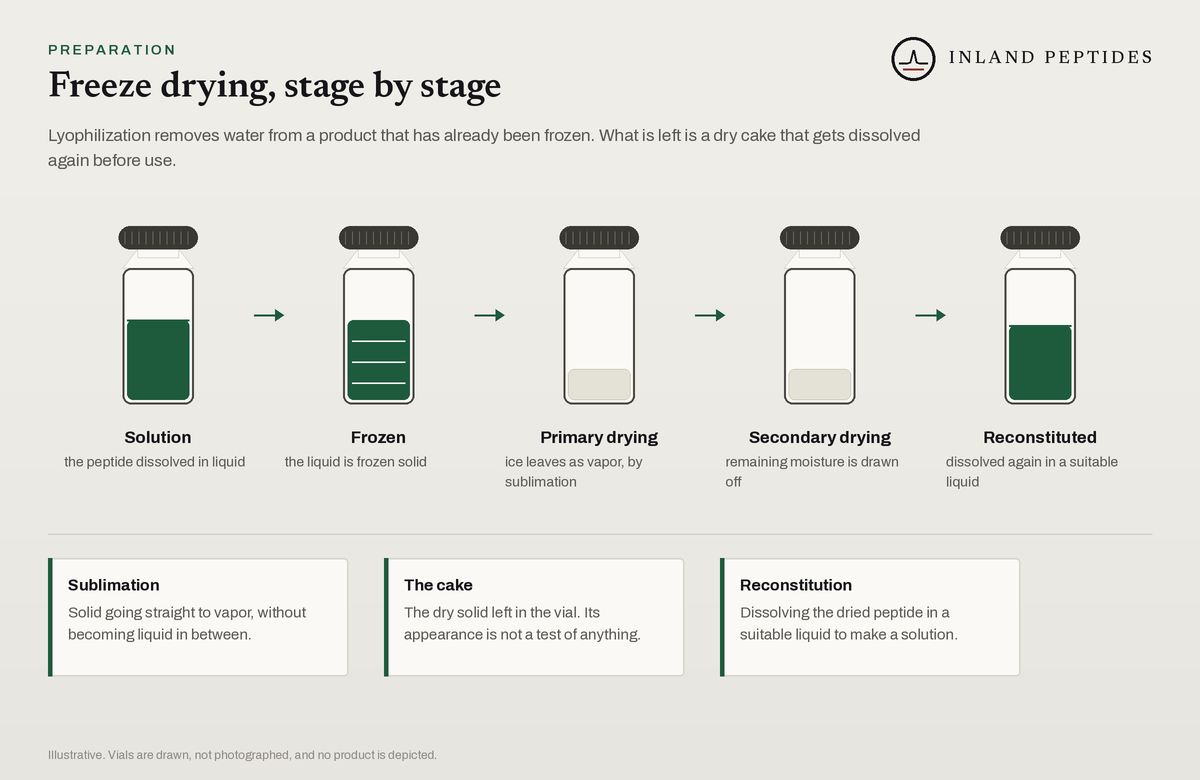
Freeze-dried powder: The dry solid left in a container after lyophilization, often described as a cake. Peptides supplied this way are dissolved in a liquid before use.
G
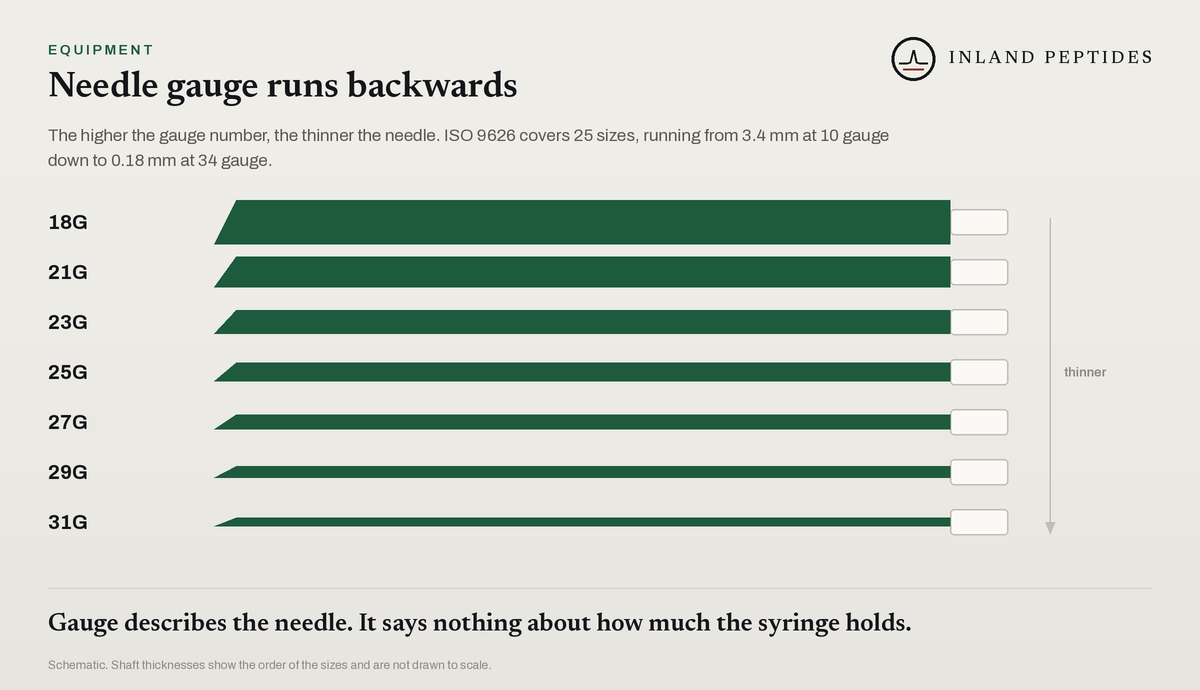
Gauge (needle gauge): A number describing needle diameter, where a larger number means a thinner needle. Gauge describes the needle only, not the volume a syringe holds or the amount of compound in it.
Gel-clot test: An endotoxin test in which clot formation indicates a reaction. A limit test gives a pass or fail at the dilution tested, while a series of dilutions can estimate the endotoxin concentration.
H
Half-life: The time it takes for a specified amount or concentration of a substance to fall by half. Elimination half-life depends on distribution as well as on clearance, and it does not by itself say how long an effect lasts.
Heavy metals: An older term for toxic metallic elements in a product, largely replaced in pharmacopoeial testing by the elemental impurities approach. A result labeled heavy metals may come from either the older method or the newer one, so the method name matters.
HPLC: High-performance liquid chromatography, a method that separates sample components by pushing liquid through a packed column under pressure. It is commonly used to determine a reported purity percentage.
Hydrolysis: A reaction in which water splits a chemical bond, potentially breaking a peptide’s backbone. Its contribution to degradation depends on the compound, formulation, and conditions.
I
Identity: Confirmation that the material in the vial is the compound named on the label. Identity and purity are separate questions, because a sample can be the wrong compound at high purity.
Injection site: The place on the body where an injection is given. Labels and study protocols name sites because absorption differs between them.
In silico: Done by computer simulation or calculation rather than by experiment. In silico results are predictions rather than measurements of a real sample.
Interaction: A change in how one substance behaves because another substance is present. An interaction can raise or lower exposure to either compound.
International unit (IU): A unit of biological activity assigned against a designated international reference preparation. There is no universal conversion from international units to milligrams.
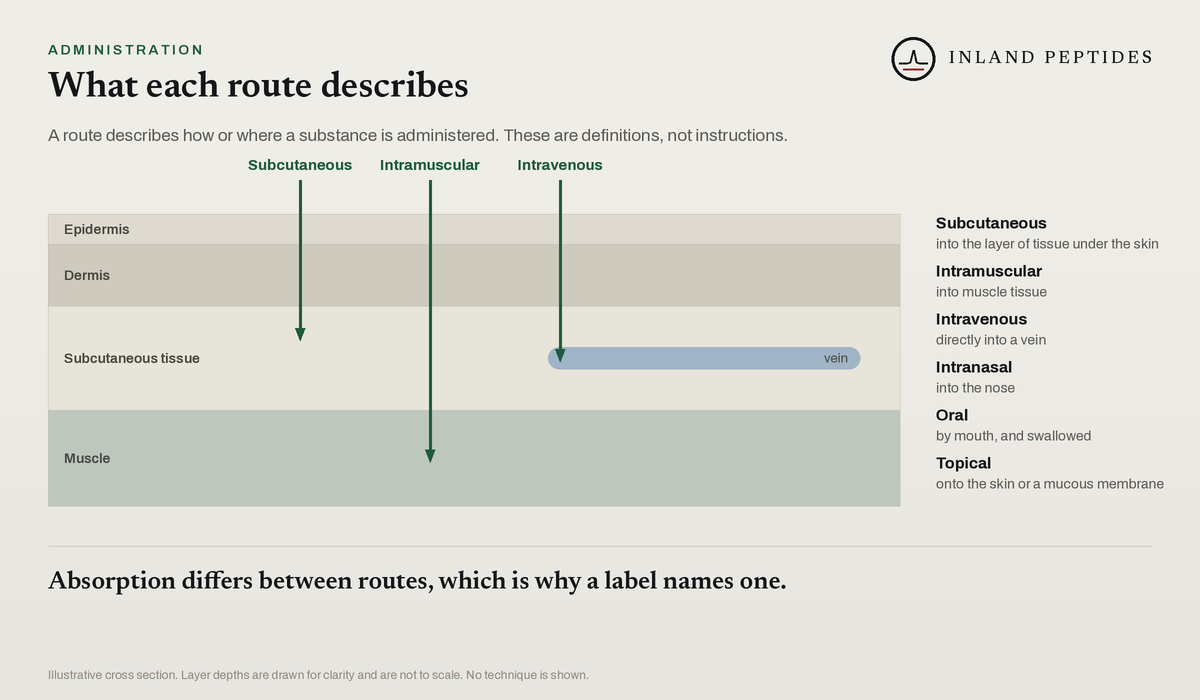
Intramuscular: Administered into muscle tissue.
Intranasal: Administered into the nose, usually as a spray or as drops.
Intravenous: Administered directly into a vein.
Investigational: Describes a product being studied for a use that has not been approved. The term identifies its status for that use, without establishing whether it works.
In vitro: Done outside a living organism, such as in cultured cells, isolated tissue, or a test tube. An in vitro result does not establish what happens in a living body.
In vivo: Done in a living organism, whether an animal or a person. An in vivo result in animals still does not establish what happens in people.
ISO/IEC 17025: The international standard used to assess the competence of testing and calibration laboratories. An accreditation body grants accreditation for a defined scope of tests.
L
Loading dose: A larger initial dose used to reach a target level in the body sooner than regular dosing would. The term comes from clinical pharmacology and is also used in community discussions.
Lot number: The code identifying a production lot, printed on the vial or carton. It connects the product to the certificate of analysis for that lot.
Lyophilization: Freeze-drying, in which a product is frozen and ice is removed by sublimation during primary drying. A secondary drying stage removes moisture remaining in the material.
M
Maintenance dose: The ongoing dose used to maintain a target level in the body. It is usually smaller than a loading dose.
Mass spectrometry: A method that measures the mass-to-charge ratio of ionized molecules. Those measurements and, when included, fragmentation data support identification, but molecular weight alone does not establish identity.
Measured quantity: The amount of the named peptide a laboratory finds in a sample, which can be compared with the label claim. It differs from chromatographic purity, which measures a share of detector signal.

Metabolism: The chemical changes a substance undergoes in the body, usually producing different molecules called metabolites. Peptides are typically broken down by enzymes into shorter fragments and amino acids.
mg/mL: Milligrams per milliliter, a unit of concentration. It states how much compound is present in each milliliter of solution and decreases when the solution is diluted.
Microdosing: Informally, using amounts smaller than those described in research or product information, with no agreed definition of how small. In drug development, it refers to very small exposures used in early research without an intended therapeutic effect.
Microgram (mcg, µg): One thousandth of a milligram. Confusing micrograms with milligrams is a thousandfold error.
Milligram (mg): One thousandth of a gram, and the usual unit for the amount of peptide in a vial.
Milliliter (mL): One thousandth of a liter, and the usual unit for the volume of liquid in a vial or a syringe.
Multiple-dose vial: A vial intended for repeated withdrawals, typically containing an antimicrobial preservative. The preservative limits bacterial growth but does not prevent all contamination.
N
N-terminus: The end of a peptide backbone that begins the sequence, written at the left. Its amino group may be chemically modified or blocked rather than free, as in an acetylated peptide.
O
Observational study: A study in which researchers record what happens without assigning who receives an intervention. Without assignment, differences between the groups compared may have causes other than the intervention.
Off-label use: Use of an approved drug in a way its approved labeling does not cover, such as a different condition, dose, or route. Providers may prescribe this way when they judge it medically appropriate, and FDA has not determined that the drug is safe and effective for that use.
Oral: Taken by mouth and swallowed. Most peptides are poorly absorbed this way because digestive enzymes break them down.
Oxidation: A chemical change in which a molecule loses electrons, often by reacting with oxygen. Several amino acids oxidize readily, which is one of the ways a peptide degrades.
P
Peptide: A chain of amino acids joined end-to-end by peptide bonds. By a common convention, chains shorter than roughly 10 to 20 amino acids are called oligopeptides and longer ones polypeptides.
Peptide bond: The link formed between two amino acids when a carboxyl group and an amino group join and a molecule of water is lost. It is the bond that holds a peptide chain together.
Peptide content: The proportion of material in a vial that is peptide rather than water, salts, or counterions, commonly expressed by mass. The measurement basis should be stated because peptide content differs from chromatographic purity and the measured amount of the named peptide.
Peptide fragment: A shorter piece of a longer peptide or protein sequence. A fragment is a different molecule from the parent and does not necessarily do what the parent does.
Peptide mapping: Cutting a peptide or protein into defined pieces and analyzing the pattern they produce. The pattern is compared against a reference to confirm sequence and to detect changes.
Peptide synthesis: Building a peptide chemically, commonly by adding amino acids one at a time to a growing chain. Incomplete or unintended reactions during assembly can produce related impurities.
pH: A measure of how acidic or basic a solution is, on a scale where lower numbers are more acidic. A value of 7 is neutral for pure water at ordinary room temperature.
Pharmacodynamics: What a substance does to the body, covering the effects it produces and the mechanism behind them.
Pharmacokinetics: What the body does to a substance over time, covering absorption, distribution, metabolism, and elimination.
Placebo: An inactive preparation given in place of the treatment under study so the two groups can be compared. Comparison against placebo is how a trial separates the effect of the treatment from everything else happening to the participants.
Polypeptide: An amino acid chain of ten or more residues. The boundaries between oligopeptide, polypeptide, and protein vary by naming convention.
Potency: How much of a substance is needed to produce a given effect. Potency describes the amount required, not the size of the effect.
Precipitation: Dissolved material coming back out of solution as a solid. It can show as cloudiness or as particles, though those appearances have other possible causes.
Preclinical research: Laboratory and animal studies that commonly come before testing in people. Nonclinical work can also continue alongside clinical development.
Prescription: An authorized practitioner’s order for a medication for a specific patient. Prescription-only status means a drug may be dispensed only on such an order.
Preservative: Here, an antimicrobial ingredient added to limit microbial growth. It does not sterilize the contents.
Protein: A molecule made of one or more amino acid chains that performs a biological function. A boundary of about 50 residues is sometimes used to distinguish proteins from shorter peptides, but it is a convention rather than a rule.
Purity: In chromatography, the share of integrated detector signal attributed to the intended peptide under the method’s conditions. Undetected substances are excluded, so this percentage does not necessarily represent the peptide’s share of all material in the vial.
Pyrogen: Any substance that produces a fever response. Bacterial endotoxin is the most common pyrogen in injectable products, though not the only possible one.
Q
Quantification limit (LOQ): The smallest amount a method can measure with acceptable accuracy. It is above the detection limit, so a substance can be detected without being reliably quantified.
R
Randomized controlled trial: A study in which participants are assigned to groups by chance, one group receiving the intervention and another a comparator. Randomization helps reduce systematic differences between the groups, though it does not guarantee comparable groups in any given trial.
Receptor: A protein that a signaling molecule binds to. Binding can activate signaling or block it, so binding alone does not mean a response follows.
Reconstitution: Dissolving a dried peptide in a suitable liquid to make a solution. The term commonly appears with peptides supplied as freeze-dried powder.
Reference standard: A material of known identity and content used to calibrate a method or to compare a sample against. Results depend on which standard was used.
Research use only (RUO): A label indicating that a product is intended for laboratory research rather than diagnostic or clinical use. The label does not constitute FDA approval or determine the product’s regulatory status.
Residual solvents: Organic solvents used in manufacturing or purification that remain in small amounts in the finished material. They are controlled by limits set according to how toxic each solvent is.
Retention time: How long a component takes to travel through a chromatography column and reach the detector. Comparing retention time against a reference standard is part of how a peak gets identified.
S
Sequence: The order of amino acid residues in a peptide, written from the N-terminus to the C-terminus. Peptides with the same amino acids in a different order are different compounds.
Sequence impurity: A related peptide produced during synthesis whose chain differs from the intended one, such as a missing or an extra amino acid. These are among the impurities a purity method is meant to separate from the intended peak.
Shelf life: The period during which a product in its unopened container is expected to meet its specifications under labeled storage conditions. Any period of use after opening is stated separately.
Side effect: An unintended effect associated with a substance, alongside the effect it was given for. It is a narrower term than adverse event, which covers any occurrence whether or not the substance caused it.
Single-dose vial: A vial intended for a single patient on a single occasion. These vials typically contain no antimicrobial preservative.
Solubility: How much of a substance will dissolve in a given liquid. A peptide that dissolves in one liquid may not dissolve in another.
Solution: A liquid with one or more substances dissolved in it. Appearance alone does not establish that the contents are fully dissolved, pure, or sterile.
Solvent: The liquid in which a substance is dissolved. In peptide manufacturing the word usually refers to the organic solvents used during synthesis and purification.
Specification: The tests, methods, and acceptance limits a material must meet for release. A result within specification means it met those stated limits.
Stability: How well a product holds its identity, strength, and quality over time under defined conditions. Stability is established by testing, not inferred from appearance.
Stacking: Community terminology for using more than one compound at the same time. The term does not establish whether a particular combination has been studied.
Sterile water for injection: A sterile, nonpyrogenic preparation of water for injection that contains no bacteriostat, antimicrobial agent, or added buffer. It is supplied only in single-dose containers.
Sterility: The absence of viable microorganisms. A sterility test is run on sampled units, so passing it does not prove that every unit in a batch is sterile.
Subcutaneous: Administered into the layer of tissue under the skin.
Sublimation: The change of a material directly from solid to vapor without becoming liquid in between. It is the step that removes ice during the primary drying stage of lyophilization.
Suspension: A liquid with solid particles dispersed through it rather than dissolved. Whether a product is meant to form a solution or a suspension depends on its formulation.
Synthetic peptide: A peptide assembled chemically rather than extracted from a biological source. Synthesis can produce related impurities, including shortened sequences or sequences with missing amino acids.
Syringe: The device used to measure and deliver a liquid dose, marked along the barrel in either volume or units. What the marks mean depends on which type of syringe it is.
Syringe units: The numbered insulin-unit markings on an insulin syringe barrel. They indicate volume calibrated for a specific insulin concentration, rather than a fixed amount of peptide.
T
Titration: Adjusting an amount in steps toward a target, usually upward from a smaller starting point. The word has a separate laboratory meaning, where it describes measuring a quantity by adding a reagent to an endpoint.
Tolerance: A reduced response to the same amount of a substance after repeated use.
Topical: Applied to the surface of the skin or to a mucous membrane.
Trifluoroacetate (TFA): A counterion left over from the trifluoroacetic acid commonly used in peptide purification. Some products are exchanged to an acetate salt instead, and a certificate may report the residual amount.
U
U-100: An insulin concentration of 100 units per milliliter, and the calibration of the syringes marked for it. On that calibration one insulin unit corresponds to 0.01 mL, which is a volume and not an amount of peptide.

V
Vial: A small container with a stoppered neck, made of glass or of plastic depending on the product. Vial size describes the container, not how much compound is inside it.