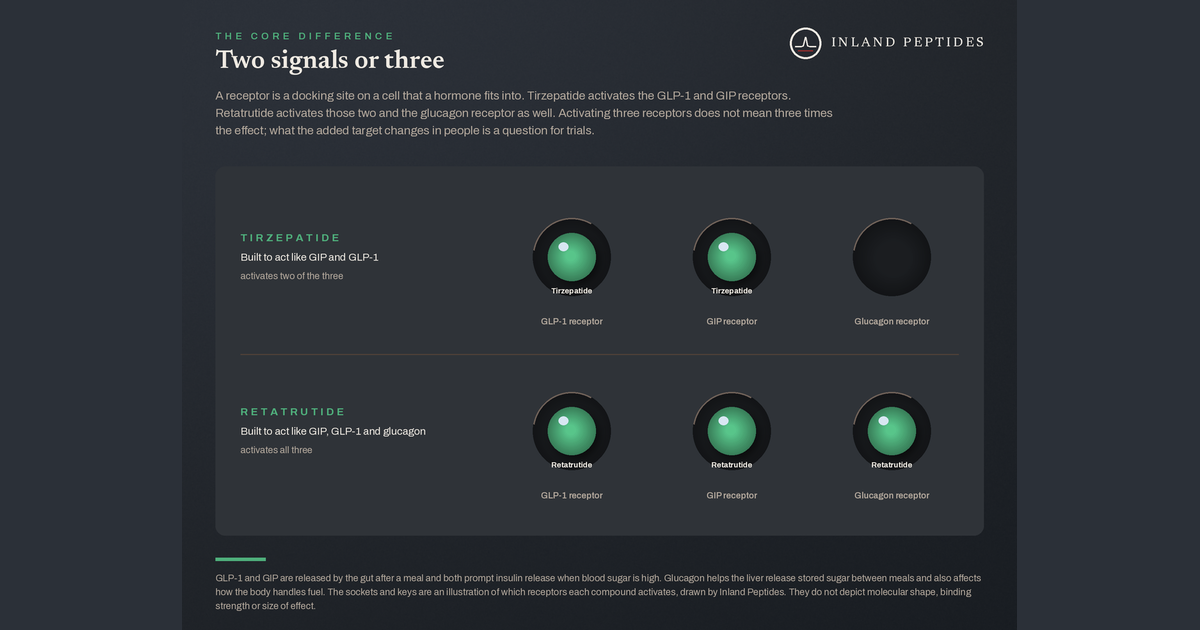
Retatrutide activates three hormone receptor types, GLP-1, GIP and glucagon, while tirzepatide activates two, GLP-1 and GIP.
Both are laboratory-made peptides developed by Eli Lilly and studied for weight reduction and type 2 diabetes.
The extra glucagon target is the main difference in how they work.
Retatrutide vs. tirzepatide at a glance
| Retatrutide | Tirzepatide | |
|---|---|---|
| What it is | One peptide that acts on three hormone receptors | One peptide that acts on two hormone receptors |
| Hormone receptors it activates | Three: GLP-1, GIP and glucagon | Two: GLP-1 and GIP |
| Main uses or research areas | Studied for weight management and type 2 diabetes | Prescribed for type 2 diabetes and weight management |
| Familiar brands | No prescription brand | Mounjaro (type 2 diabetes); Zepbound (weight management) |
| FDA approval | Sold for research use only. Not FDA-approved for human use. | Used in FDA-approved prescription medications |
| Main difference in the evidence | Published clinical trials | Published clinical trials plus experience with prescription products |
What is retatrutide?
Retatrutide is a single peptide molecule developed by Eli Lilly. It acts on the same two receptors as tirzepatide, GLP-1 and GIP, and adds a third, glucagon.
That third signal is the reason the two compounds are not interchangeable, and it is where most of the comparison below centers.
Researchers have studied retatrutide for weight loss, type 2 diabetes and obesity-related conditions such as liver fat buildup, knee osteoarthritis pain and sleep apnea.
What is tirzepatide?
Tirzepatide is a laboratory-made peptide that activates two receptors, GLP-1 and GIP. It stops one signal short of retatrutide, which also reaches glucagon.
It is the compound in Mounjaro, prescribed for type 2 diabetes, and Zepbound, prescribed for weight management. Both are injectable medications.
Research-use-only products labeled retatrutide or tirzepatide cannot be assumed to match the quality, safety or effects of the preparations used in clinical trials.
The main differences
The two targets they share
Your gut releases GLP-1 and GIP when you eat. Both help trigger insulin release when blood sugar rises. GLP-1 also slows stomach emptying and helps signal fullness to the brain.
A receptor is a docking site on a cell that a hormone can activate. Both compounds act on GLP-1 and GIP receptors.
The third target: glucagon
Glucagon helps raise blood sugar when it falls between meals by signaling the liver to release stored sugar.
Its signaling also affects how the body handles fuel, including fat stored in the liver.
In the study that introduced retatrutide, activating glucagon receptors increased energy use and contributed to weight loss in mice. But that finding does not establish the same effect in people.
Human trials measure the effects of the whole retatrutide molecule. As a result, they do not isolate how much of its weight-loss effect comes from glucagon activity.
In short, more receptor targets do not automatically mean greater effectiveness.
What have studies found?
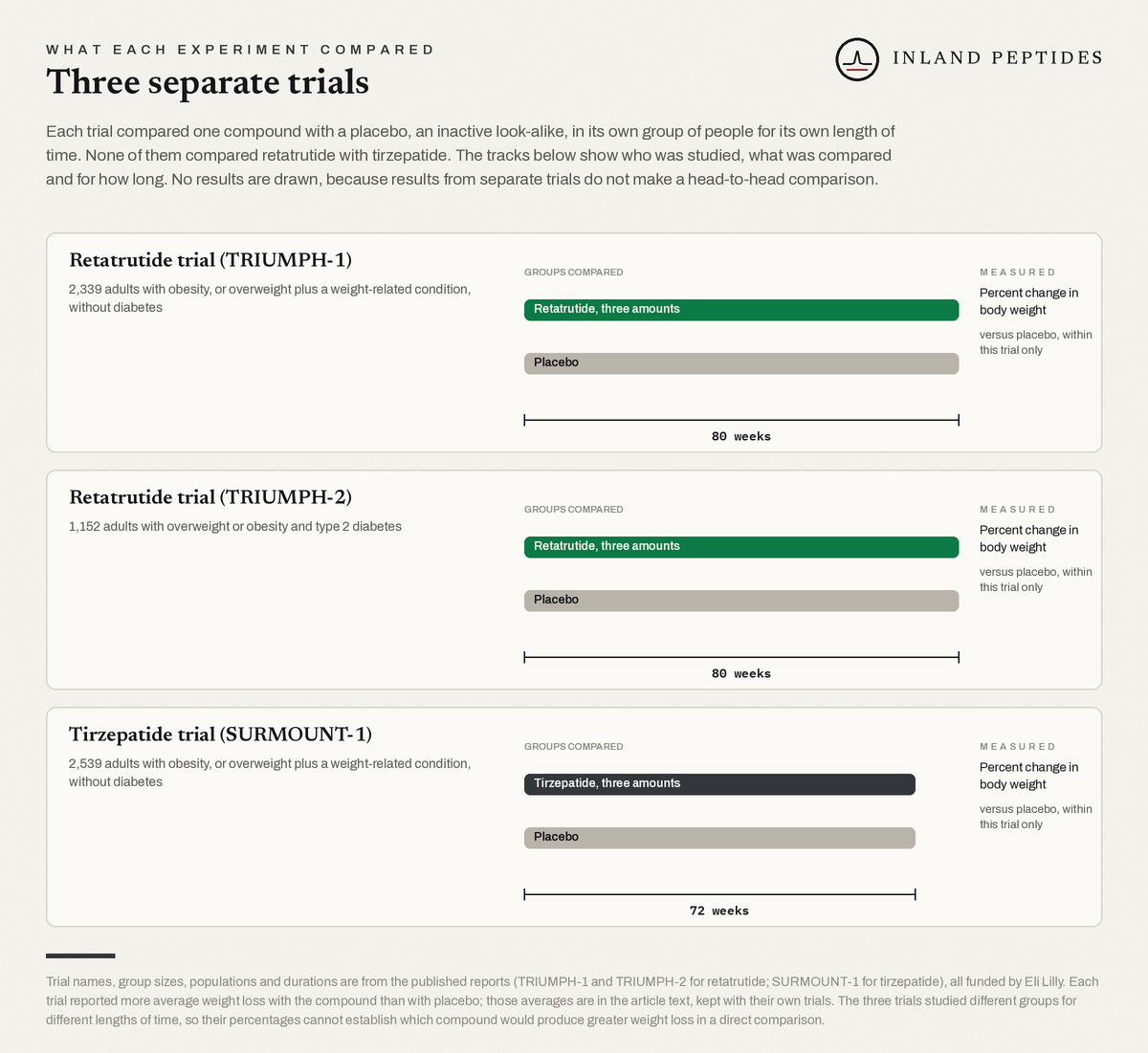
Both compounds reduced average body weight compared with placebo, an inactive look-alike. Participants were assigned to groups by chance. These studies tested each compound separately, rather than against the other.
Retatrutide in people without diabetes
An 80-week trial studied 2,339 adults with obesity, or overweight with a weight-related condition, who did not have diabetes. Average weight loss ranged from about 18 to 25 percent across three retatrutide groups, compared with about 4 percent with placebo.
These are group averages; individual results can differ. Participants with knee osteoarthritis or sleep apnea also had greater improvements in knee pain or breathing interruptions than those receiving placebo. Eli Lilly funded the trial.
Retatrutide in people with type 2 diabetes
Another 80-week trial studied 1,152 adults with overweight or obesity and type 2 diabetes. Average weight loss ranged from about 12 to 19 percent across three retatrutide groups, compared with about 5 percent with placebo. Blood sugar control also improved. Eli Lilly funded the study.
Tirzepatide in people without diabetes
A 72-week trial studied 2,539 adults with obesity, or overweight with a weight-related condition, who did not have diabetes. Average weight loss ranged from about 15 to 21 percent across three tirzepatide groups, compared with about 3 percent with placebo. Eli Lilly funded the study.
Tirzepatide has also been studied in people with type 2 diabetes and compared directly with semaglutide. Those findings, though, do not establish how it compares with retatrutide.
What these results mean
These studies show that both compounds produced weight loss compared with placebo. Because they studied different groups for different lengths of time, their percentages do not establish which compound produces more weight loss or fewer side effects.
How do the reported side effects compare?
The most commonly reported side effects of both compounds are digestive: nausea, diarrhea, vomiting and constipation.
In the retatrutide study involving people with type 2 diabetes, diarrhea affected about a quarter to a third of participants receiving retatrutide, compared with 13 percent receiving placebo. Nausea affected 14 to 28 percent, compared with 8 percent.
In that study, low blood pressure and unusual skin sensations, such as tingling, were more common with retatrutide than with placebo.
The study counted permanent treatment stops due to reported health problems or death. This combined measure was higher in the two groups receiving more retatrutide than in the placebo group. Deaths occurred in every group; investigators judged them unrelated to treatment.
An earlier 48-week retatrutide trial involving 338 adults with obesity, or overweight with a weight-related condition, found increases in heart rate. These depended on the amount studied, peaked around 24 weeks and then declined.
In the tirzepatide study, digestive effects were mostly mild to moderate and occurred mainly as doses increased during the study. About 4 to 7 percent stopped treatment because of adverse events, compared with under 3 percent receiving placebo.
The Zepbound label carries a boxed warning about thyroid C-cell tumors found in rats. Whether this risk applies to people is unknown.
Tirzepatide must not be used by people with a personal or family history of medullary thyroid carcinoma, a rare thyroid cancer, or MEN 2, an inherited condition that raises its risk.
Other warnings include inflammation of the pancreas, gallbladder problems, kidney injury from dehydration, severe digestive reactions and allergic reactions.
Study reports do not capture every possible risk, and shared receptor targets do not establish identical safety profiles.
So what is the difference?
Retatrutide activates GLP-1, GIP and glucagon receptors, while tirzepatide activates GLP-1 and GIP receptors. The additional glucagon activity affects how the body handles fuel, but its contribution to retatrutide’s effects in people remains under study.
Both have produced weight loss in their own clinical studies. But those separate results do not establish a winner between them.
A qualified clinician can explain prescription treatment options based on a person’s health and medical history.