Testosterone is a steroid hormone. Peptides are chains of amino acids. Some peptides help signal the body to make testosterone, but they are different molecules.
Testosterone replacement supplies the hormone directly. Other medicines and research compounds affect the signals involved in its production.
The differences matter when interpreting studies of low testosterone, fertility and supplements marketed as hormone boosters.
What is the difference between testosterone and peptides?
The body makes testosterone from cholesterol. Peptides are made from amino acids, the building blocks of proteins.
Hormones are chemical messengers. Testosterone is one, and so are some peptides. They can share a signaling role while having different chemical structures.
Several peptide and protein hormones help regulate testosterone:
Gonadotropin-releasing hormone, or GnRH, is a peptide of ten amino acids released by the hypothalamus.
Luteinizing hormone (LH) and follicle-stimulating hormone (FSH) are larger protein hormones released by the pituitary gland.
Kisspeptin is a peptide made in the brain that stimulates GnRH release.
These messengers influence testosterone production rather than supplying testosterone itself.
What testosterone does beyond sexual function
Testosterone supports male sexual development and characteristics such as facial hair, a deeper voice and muscle development. It also affects body fat, helps support sperm production inside the testes and increases red blood cell production.
Low energy, low mood, reduced muscle and low sex drive can have many causes. Symptoms alone do not establish testosterone deficiency.
How is testosterone production regulated?
Signals travel from the brain to the testes, while feedback helps regulate how much testosterone is made.
The main steps are:
The hypothalamus, a region at the base of the brain, releases GnRH in pulses.
GnRH tells the pituitary gland, just below it, to release LH and FSH into the blood.
LH tells cells in the testes to make testosterone. FSH and testosterone within the testes support sperm production.
Testosterone feeds back to the brain and pituitary, slowing GnRH and LH release as levels rise. This feedback helps regulate production.
Supplying testosterone versus influencing the signal
Replacement and signaling treatments act at different points in this system.
Testosterone supplied from outside raises blood levels directly. Feedback then reduces the signals that drive the testes’ own production, which can also reduce sperm production.
Other approaches stimulate or substitute for a messenger. Their effects depend on which parts of the system can respond. More LH, for example, cannot restore testosterone production if the testes cannot respond to it.

How the main approaches compare
These approaches differ in what they supply or influence and in the evidence supporting them.
| Approach | What it is | Use or research question | Main distinction or evidence limitation |
|---|---|---|---|
| Testosterone replacement | The hormone itself, given from outside | Treatment of diagnosed deficiency from testicular or pituitary causes | Suppresses the body’s own production and can reduce sperm production |
| Human chorionic gonadotropin (hCG) | A protein hormone that acts like LH on the testes | Stimulating testosterone production in selected signaling deficiencies | Requires testes that can respond; fertility evidence is from specific diagnosed conditions |
| Clomiphene | An oral medicine that blocks estrogen feedback in the brain | Raising LH, FSH and the body’s own testosterone in men with hypogonadism | Evidence in men is mostly observational, with a few randomized trials |
| Enclomiphene | One of the two components of clomiphene | Compared with testosterone gel in randomized trials of men with secondary hypogonadism | Raised testosterone while sperm concentration stayed in range; trials were manufacturer-sponsored |
| Pulsatile GnRH (gonadorelin) | Synthetic GnRH, the ten amino acid hypothalamic peptide | Replacing the missing GnRH signal in men whose hypothalamus does not make it | Depends on a responsive pituitary and testes; findings concern a specific diagnosed condition |
| Long-acting GnRH analogues | Modified GnRH peptides designed to act continuously | Lowering testosterone production, as in prostate cancer treatment | Sustained stimulation suppresses LH and FSH release; results do not transfer to pulsatile GnRH |
Peptides studied with testosterone
| Approach | What it is | Use or research question | Main distinction or evidence limitation |
|---|---|---|---|
| Kisspeptin-54 | A 54 amino acid brain peptide that acts above GnRH | Whether stimulating GnRH release raises LH, FSH and testosterone | Human data are short infusions in small groups measuring hormone levels |
| Kisspeptin-10 | The shortest active fragment of kisspeptin | Same question; also tested over days to see whether the effect lasts | Small five-day and twelve-day experiments found different LH and FSH responses; testosterone remained elevated after sustained exposure |
Supplements marketed for testosterone
| Approach | What it is | Use or research question | Main distinction or evidence limitation |
|---|---|---|---|
| D-aspartic acid | An amino acid sold as a booster | Whether it raises LH and testosterone | One small positive study; a trial in trained men found no increase and a decrease at a higher amount |
| Ashwagandha extract | An herbal extract | Whether it changes hormone levels, fatigue and vigor | A salivary testosterone increase without a difference in symptoms, in one small crossover trial |
| Zinc | An essential mineral | Whether zinc status affects testosterone | Small experiments found lower testosterone after zinc restriction and higher levels after correction of deficiency; adequate zinc was not tested |
| Vitamin D | A vitamin and hormone precursor | Whether supplementation raises testosterone | Pooled trials found no clear effect; an earlier within-group increase alone did not establish benefit over placebo |
Medical approaches to testosterone deficiency
The cause of testosterone deficiency helps determine which medical approaches may be appropriate.
How deficiency is diagnosed
The Endocrine Society recommends diagnosing deficiency using symptoms and signs together with consistently low testosterone on repeated blood tests. A single result or symptom is insufficient.
Testing also helps identify the cause. Primary hypogonadism involves inadequate testosterone production by the testes, often with elevated LH and FSH. Secondary hypogonadism involves inadequate signaling from the hypothalamus or pituitary, with LH and FSH low or inappropriately normal.
That distinction matters because treatments act at different points in the system.
Testosterone replacement
Testosterone replacement supplies the hormone directly. It is used for diagnosed deficiency associated with testicular or pituitary causes.
Replacement can suppress sperm production through hormonal feedback. Testosterone gels also carry a warning about accidental transfer to children.
A trial in 790 men aged 65 and over with low testosterone and symptoms found moderate improvement in sexual function and some improvement in mood after one year of testosterone gel. Vitality did not improve. Walking results differed: the dedicated physical-function trial found no significant benefit, while an analysis across all three linked trials did.
A safety trial of 5,246 men aged 45 to 80 with low testosterone and existing or high cardiovascular risk found similar rates of major cardiovascular events with testosterone gel and placebo over about three years of follow-up. Atrial fibrillation, acute kidney injury and pulmonary embolism were more frequent with testosterone. The gel’s manufacturer and others funded the trial.
Treatments that act on the signal
hCG and clomiphene are used clinically to influence testosterone production. Enclomiphene has also been studied in randomized trials. hCG requires responsive testes; clomiphene and enclomiphene also depend on responsive signaling through the brain and pituitary.
Human chorionic gonadotropin, or hCG, is a protein hormone that acts like LH. It stimulates the testes directly and is used in selected cases of hypogonadotropic hypogonadism, where inadequate signaling leads to low testosterone.
In that condition, hCG, often combined with an FSH-containing preparation, can support sperm production. A separate observational report of 26 men receiving hCG during testosterone replacement found preserved semen measurements. This small study does not establish that fertility will be maintained.
Clomiphene blocks estrogen feedback at the hypothalamus and pituitary, increasing signals involved in testosterone production. A review of 19 studies involving 1,642 men with hypogonadism found higher testosterone, LH and FSH during treatment and few reported side effects. Most studies were observational.
Enclomiphene is one of clomiphene’s two components. In two randomized trials of overweight men with secondary hypogonadism, both enclomiphene and testosterone gel raised testosterone over 16 weeks. LH and FSH rose with enclomiphene and fell with the gel. Sperm concentration remained in the normal range with enclomiphene but fell markedly with the gel. The trials were manufacturer-sponsored.
Why fertility goals matter
Testosterone replacement can suppress sperm production. Certain signaling treatments have supported it in specific diagnoses, but individual outcomes vary.
The Endocrine Society recommends against starting testosterone therapy in men planning fertility in the near term. Fertility goals therefore matter alongside symptoms and the cause of deficiency.
Which peptides have been studied in connection with testosterone?
Kisspeptin and GnRH have been studied in people for their effects on reproductive hormones. The kisspeptin studies below mainly measured short-term responses. The GnRH evidence also includes sperm-production outcomes over months in men with a specific signaling deficiency.
Kisspeptin: acting one step above GnRH
Kisspeptin stimulates GnRH release from neurons in the hypothalamus. Studies of families with impaired puberty linked its receptor to reproductive development.
The name covers several fragments of a precursor protein. Kisspeptin-54 contains 54 amino acids; kisspeptin-10 contains its final ten and retains biological activity. The studies below identify which form was tested.
Researchers have examined whether stimulation raises LH, FSH and testosterone, and whether the response persists.
In a study of six healthy men, kisspeptin-54 produced higher LH, FSH and testosterone levels than saline in a crossover comparison.
Kisspeptin-10 also raised LH and testosterone in small studies, including four healthy men and four men with type 2 diabetes and mildly low testosterone. A separate small comparison in healthy men found similar LH and FSH responses to the two kisspeptin forms, with a larger response to GnRH under the study conditions.
How kisspeptin responses vary
Responses differed by condition. In a study of congenital hypogonadotropic hypogonadism, eleven participants with the ongoing condition had no LH response to kisspeptin. A participant whose condition had reversed responded. The finding illustrates the importance of a functioning GnRH signaling pathway.
Responses can also weaken with repeated exposure. In women with hypothalamic amenorrhea, kisspeptin-54 produced a strong initial LH response that was much smaller after two weeks.
In a study of healthy men, sustained kisspeptin-10 exposure over five days left testosterone elevated in four participants, while LH and FSH were similar to placebo at the end. A separate twelve-day experiment in seven men found sustained LH and FSH responses with intermittent stimulation. Fifteen men participated across the study’s three parts.
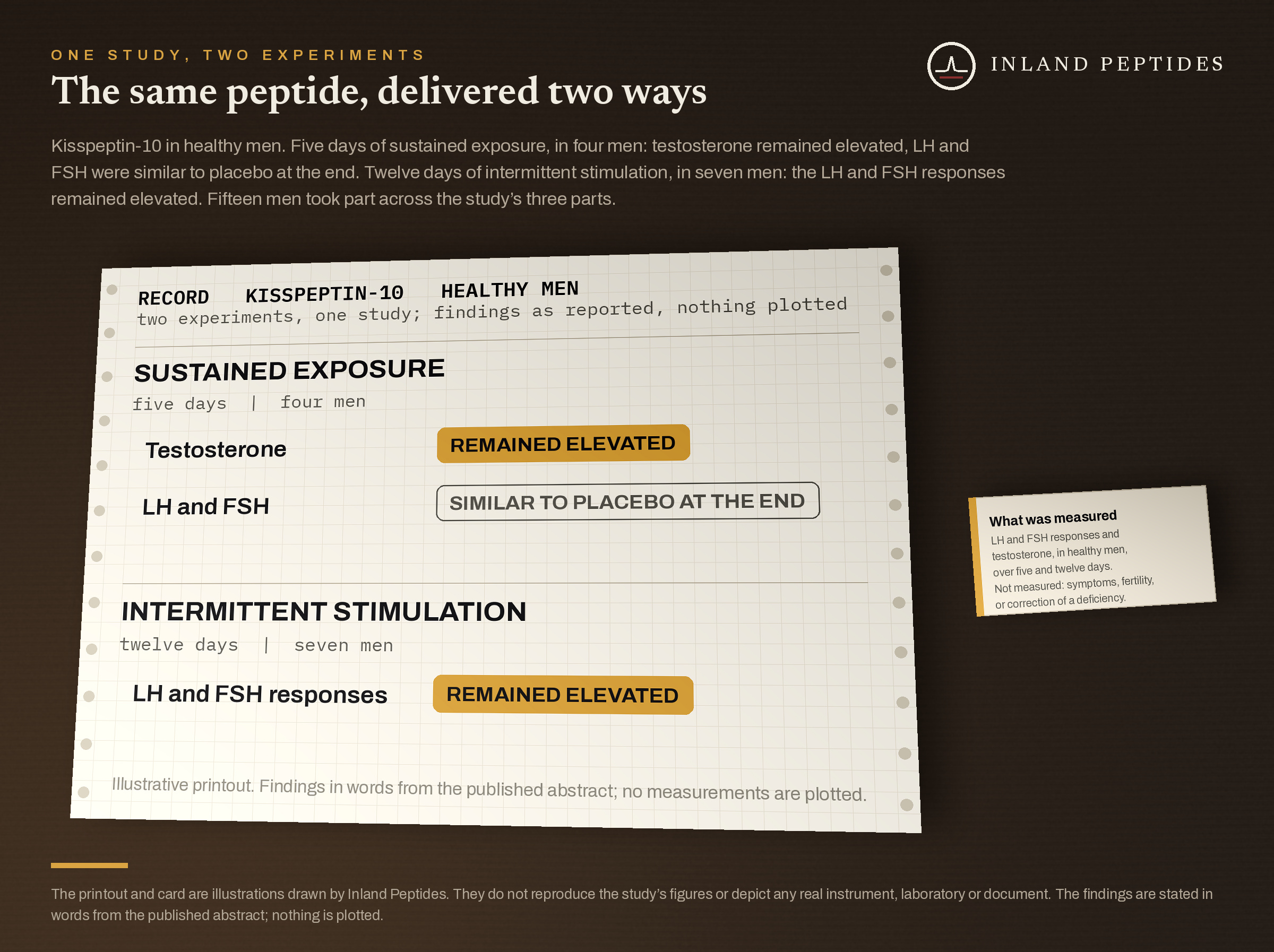
These studies involved small groups and measured hormones over hours or days. They did not establish sustained improvement in symptoms, fertility or diagnosed testosterone deficiency.
GnRH and gonadorelin: acting on the pituitary
GnRH is the ten amino acid peptide released by the hypothalamus. Gonadorelin is a synthetic version with the same sequence and acts directly on the pituitary.
Research in men lacking a hypothalamic GnRH signal has examined whether replacing it can restore testosterone and sperm production.
Pulsatile GnRH stimulation promotes LH and FSH release. Sustained receptor stimulation can instead suppress their release after an initial rise, reducing testosterone production.
Long-acting GnRH analogues use that suppressive effect in prostate cancer treatment. Their findings cannot automatically be transferred to pulsatile gonadorelin, or vice versa.
A pooled analysis of seven studies involving 420 men with congenital hypogonadotropic hypogonadism compared pulsatile GnRH with gonadotropin treatment, such as hCG with FSH. GnRH was associated with larger testicular volume and sperm appearing about five months earlier. Sperm-detection rates, sperm concentration and pregnancy rates did not differ significantly.
These findings concern men with a specific signaling deficiency. GnRH requires a responsive pituitary, and restoring its signal cannot overcome testes that do not respond to LH. The results do not establish the effects of adding GnRH in men with normal signaling.
What a temporary hormone change does and does not show
A short-term hormone increase demonstrates a physiological response. It does not establish that symptoms improved or a deficiency was corrected over time.
The GnRH research above also measured sperm production in a diagnosed condition. The kisspeptin studies discussed here did not assess that clinical outcome.
Dietary supplements marketed for testosterone
Dietary supplements are a separate category from OTC medicines. Common testosterone-booster claims involve the ingredients below, whose studies examined different populations and outcomes.
D-aspartic acid
D-aspartic acid is an amino acid found in the pituitary and testes. A small study comparing 23 men taking it with 20 receiving placebo reported increased LH and testosterone after twelve days.
A randomized trial in 24 resistance-trained men found no testosterone increase with one tested amount and lower total and free testosterone with another over two weeks. Neither study assessed symptoms or enrolled men with diagnosed testosterone deficiency.
Ashwagandha
A crossover trial enrolled 57 overweight men aged 40 to 70 with mild fatigue; 43 completed both eight-week treatment periods. Salivary testosterone increased about 15 percent more with a standardized ashwagandha extract than with placebo.
Fatigue, vigor and sexual well-being did not differ significantly between extract and placebo. Participants were not selected for low testosterone. The manufacturer supplied the extract but reported no involvement in study design or analysis.
Zinc
Small experiments examined zinc deficiency. Restricting zinc intake in four young men lowered testosterone over 20 weeks. Supplementing nine older men with marginal zinc deficiency roughly doubled testosterone over six months.
Those findings concern zinc restriction or deficiency. They do not establish the same effect in men with adequate zinc.
Vitamin D
An analysis of 54 overweight men with vitamin D deficiency reported rising testosterone within the supplement group over one year, without a change in the placebo group. That within-group finding alone does not establish a difference between treatments.
A separate twelve-week trial in 100 men with low testosterone and low-to-insufficient vitamin D found no effect on testosterone or other hormone outcomes.
A pooled analysis of randomized trials, including 11 comparisons in its main testosterone analysis, found no clear effect on total testosterone or measures of available testosterone. Confidence in the evidence was low.
Reading supplement evidence
Three distinctions help explain the findings:
Correcting a nutrient deficiency addresses a nutritional problem, as illustrated by the small zinc experiments.
A hormone change, such as the ashwagandha finding, does not by itself establish improved symptoms or fertility.
Meaningful treatment benefit requires evidence relevant to diagnosed testosterone deficiency, beyond a change in one measurement.
The supplement studies discussed here do not establish a substitute for medical evaluation and treatment of testosterone deficiency.
Which approach is best?
There is no universal best approach. These compounds address different biological steps and have been studied for different purposes.
The cause of low testosterone, symptoms, fertility goals and medical history shape clinical decisions. The kisspeptin studies reviewed here demonstrate short-term hormone responses in small groups rather than established treatment outcomes.
The main differences between peptides and testosterone
Replacing testosterone and influencing its production have different effects, particularly on sperm production.
Kisspeptin stimulates GnRH signaling at the hypothalamus. Gonadorelin acts directly on the pituitary. Their different targets and study outcomes help explain why findings about one cannot simply be assigned to the other.
Testosterone treatment requires a prescription and evaluation by a qualified clinician. That assessment considers whether a deficiency exists, its cause and the person’s medical and fertility goals.