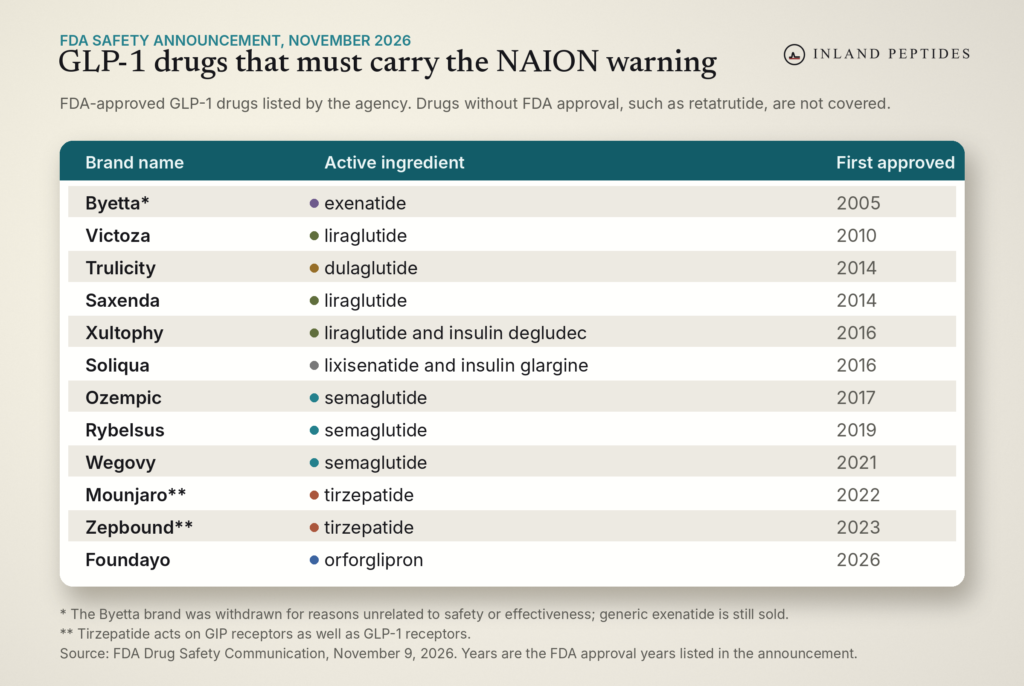
The U.S. Food and Drug Administration on November 9 required makers of all GLP-1 drugs, including Ozempic, Wegovy, Mounjaro and Zepbound, to add a warning about a rare eye condition that can cause sudden vision loss.
The FDA said drugmakers must describe the potential increased risk of non-arteritic anterior ischemic optic neuropathy, or NAION, in the Warnings and Precautions section of their labels.
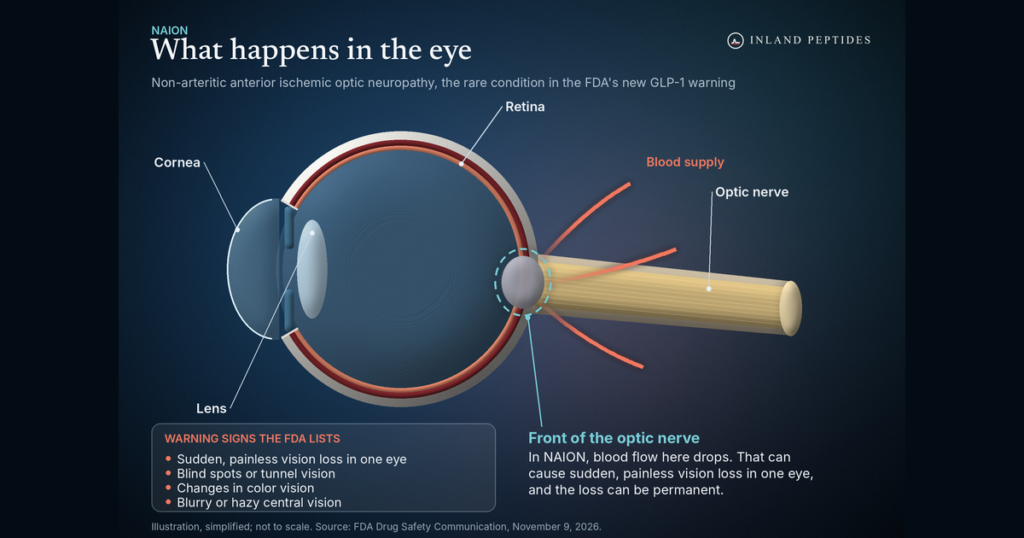
NAION occurs when blood flow to the front of the optic nerve drops. It usually causes sudden, painless vision loss in one eye, and the loss can be permanent. It affects roughly 2 to 10 of every 100,000 adults over 50 each year, according to estimates cited by the FDA.
The agency described “a potential increased risk of rare NAION events” in people taking GLP-1 drugs. It did not conclude that the medicines cause the condition.
The requirement also covers Rybelsus, Trulicity, Victoza, Saxenda and Eli Lilly’s new pill, Foundayo. The FDA said cases have been reported with every marketed GLP-1 product.
The FDA reviewed 126 clinical trials involving more than 134,000 patients and identified 15 probable cases. Ten occurred in people taking a GLP-1 drug and five in people taking placebo. The rate was 6.4 cases per 100,000 person-years with GLP-1 drugs, compared with 3.8 among people taking placebo or other diabetes medicines. One person followed for one year contributes one person-year.
In health records of adults with type 2 diabetes, the agency found a higher risk with GLP-1 drugs than with DPP-4 inhibitors, another class of diabetes medicines. Compared with a third class, SGLT2 inhibitors, the difference was not statistically significant.
Diabetes, high blood pressure, sleep apnea and smoking are risk factors for NAION. Their frequency among GLP-1 users made individual case reports difficult to interpret, the FDA said.
The agency advised patients to report sudden vision loss or other vision changes immediately. It told doctors to refer suspected cases to an eye specialist and consider stopping the GLP-1 medicine in patients who develop NAION, unless the benefits clearly outweigh the risk.
The FDA began its review after a July 2024 study in JAMA Ophthalmology reported an association between NAION and semaglutide, the ingredient in Ozempic, Wegovy and Rybelsus.
In June 2025, the European Medicines Agency’s safety committee concluded that NAION is a very rare side effect of semaglutide that may affect up to 1 in 10,000 people taking it.
Novo Nordisk, which makes the semaglutide drugs, said it “continues to believe the data do not establish a cause-and-effect relationship,” according to Reuters.
Lilly, which makes Mounjaro, Zepbound and Foundayo, said the FDA’s notice “does not reference any findings specific to Lilly medicines” and that it would respond to the agency promptly. Both companies spoke to Reuters.
Note that the warning only applies to FDA-approved drugs. It does not cover other peptides such as Lilly’s retatrutide, which is in Phase 3 trials and not yet approved by the FDA.