Ipamorelin, GHRP-2 and GHRP-6 trigger growth hormone release through the same receptor, but differ in structure and in the evidence on appetite and other hormones.
Small human studies found that GHRP-2 increased food intake and GHRP-6 changed sleep stages and raised stress hormones. Ipamorelin, by contrast, has been studied for hormone release and bowel recovery after surgery.
| Ipamorelin | GHRP-2 | GHRP-6 | |
|---|---|---|---|
| What it is | Five amino acids. | Six amino acids; also called pralmorelin. | Six amino acids. |
| Receptor | Ghrelin receptor. | Ghrelin receptor. | Ghrelin receptor. |
| Human research | Growth hormone release; bowel recovery after surgery. | Growth hormone release; diagnostic testing; food intake. | Growth hormone, stress hormones and sleep; stroke recovery with another drug. |
| Appetite and other hormones | Pig studies found a narrower stress-hormone response. Human appetite results are not reported in the studies summarized here. | Increased food intake in adults. Small rises in ACTH, cortisol and prolactin. | Raised ACTH and cortisol in men. These human studies do not answer the appetite question. |
| Regulatory status | Research use only; not FDA-approved for human use. | Approved in Japan as a diagnostic test for growth hormone deficiency. Not FDA-approved. | Research use only; not FDA-approved for human use. |
| Main evidence limitation | Bowel recovery trial found no statistically significant benefit. | Appetite studies involved few participants. | Stroke trial tested a combination, not GHRP-6 alone. |
What does GHRP mean?
GHRP means growth hormone-releasing peptide. These lab-made peptides signal the pituitary, a small gland at the base of the brain, to release growth hormone.
GHRP-2 and GHRP-6 each have six amino acids, including modified forms not found in the body’s proteins. GHRP-2 is also called pralmorelin.
Ipamorelin has five amino acids. Researchers developed it from an earlier GHRP.
One receptor, three compounds
All three mimic ghrelin, a hormone made mostly in the stomach that helps signal hunger. They activate its receptor in the brain and pituitary to trigger growth hormone release.
Sermorelin and tesamorelin, unlike these three, use a different receptor, for growth hormone-releasing hormone (GHRH).
These peptides stimulate the body’s own growth hormone; none is growth hormone itself.
What human studies found
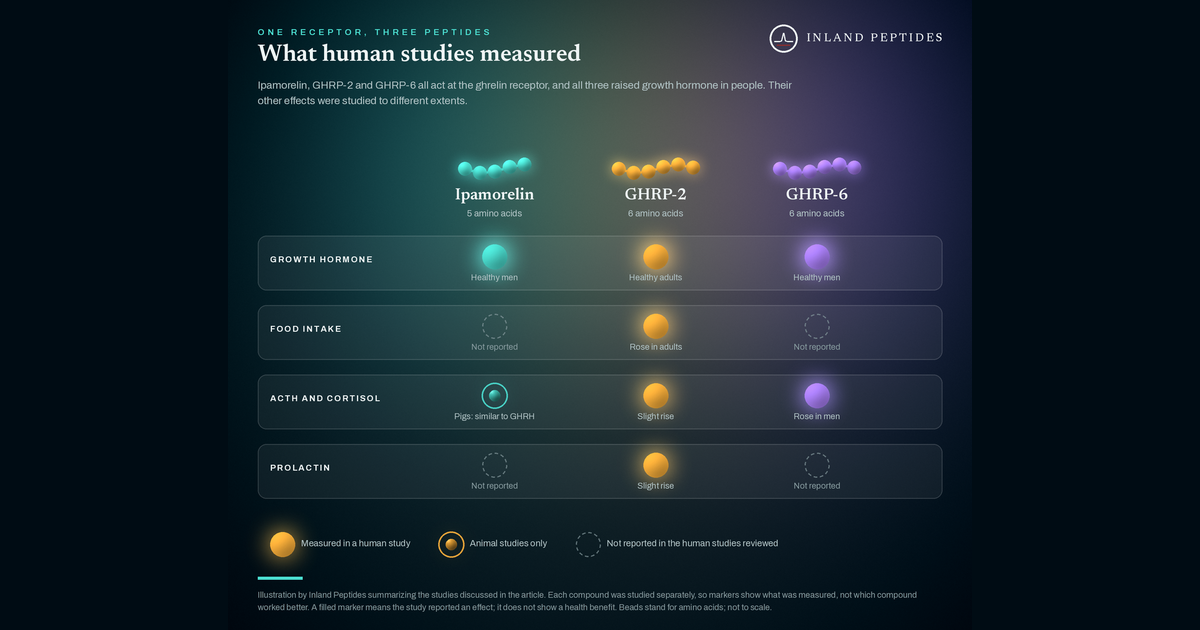
Human studies show that all three raise growth hormone, but no published trial has compared all three directly.
Growth hormone release
- Ipamorelin: growth hormone peaked at about 40 minutes in a study in healthy men.
- GHRP-2: a diagnostic study compared 77 healthy adults with 58 patients who had severe growth hormone deficiency. Growth hormone peaked within an hour in healthy adults but stayed low in the patients.
- GHRP-6: growth hormone rose compared with placebo in a nighttime study in healthy men. Placebo is an inactive treatment used for comparison.
Still, a rise in growth hormone alone does not prove gains in muscle, fat loss or better exercise recovery.
Sleep
Men in the GHRP-6 study spent more time in stage 2 sleep, a lighter stage, than with placebo. Deep sleep and the other sleep measures did not change, though.
The study did not show whether these changes improved sleep quality or lasted over time.
Appetite
Small human studies found increased appetite or food intake with GHRP-2:
- In a study of 7 healthy men, participants ate about 36% more at a buffet meal with GHRP-2 than with saline.
- In a follow-up study of 19 lean and obese adults, food intake was about 10% higher at the lower dose and 34% higher at the higher dose than with placebo.
- In a 12-month study in children with growth hormone deficiency, 7 of 10 reported a bigger appetite during the first six months. Their body mass index did not change significantly.
These appetite results concern GHRP-2, so they do not show whether ipamorelin or GHRP-6 has the same effect.
A two-week mouse study found increased body fat with ipamorelin and GHRP-6. But those results do not establish an appetite effect in people.
ACTH, cortisol and prolactin
ACTH helps control cortisol, a hormone involved in the stress response. Prolactin is best known for its role in milk production.
- GHRP-2: a study of six young adults found small rises in ACTH, cortisol and prolactin alongside growth hormone.
- GHRP-6: ACTH and cortisol also rose compared with placebo in the nighttime study.
- Ipamorelin: in studies in pigs, its ACTH and cortisol responses were similar to GHRH’s, while both GHRPs raised these hormones. This narrower response in animals does not establish the same effect or greater safety in people.
Research beyond hormone levels
- GHRP-6: a stroke trial of 188 patients tested it with epidermal growth factor against standard care. After seven days of treatment and six months of follow-up, the combination did not show an overall reduction in disability. A possible benefit in a small group with severe strokes needs confirmation; the trial also cannot separate GHRP-6’s effect from the other drug.
- Ipamorelin: in a trial after bowel surgery, patients tolerated a solid meal about seven hours sooner than with placebo. The difference was not statistically significant, so the trial did not establish a recovery benefit.
Medical and research status
None of the three is FDA-approved for human use. Products sold as research vials are for research use only.
Japan has approved GHRP-2, called pralmorelin, as a single-dose test for growth hormone deficiency, according to the Japanese product information.
An FDA review says development of ipamorelin for bowel recovery was discontinued.
Safety findings
- GHRP-2: the Japanese product information lists warmth (reported in 16% of patients) and abdominal rumbling among the more frequent reactions. Less common reactions included nausea, sweating, hunger and low blood pressure. These findings concern a one-time diagnostic test.
- Ipamorelin: an FDA review of the surgery trial notes that low potassium and high blood sugar were more common with ipamorelin. Two patients given ipamorelin died after serious surgical complications. Reviewers could not determine whether the drug contributed to their deaths.
- GHRP-6: severe adverse events were more frequent with the combination in the stroke trial than with standard care. Investigators, however, judged none to be treatment-related. The higher count alone does not establish that the drugs caused them.
Most treatments in these studies lasted hours or days, so the findings do not establish long-term safety in healthy adults.
Comparing the evidence
GHRP-2 increased food intake in small human studies; GHRP-6 changed sleep stages and raised stress hormones. Ipamorelin showed a narrower hormone response in animals, but its human bowel recovery trial did not establish a benefit.
These separate studies cannot show which compound works better or is safer.